20th February 2019
Our departure from Akaroa was severely delayed due to the late return of the tour buses from Christchurch. Heavy traffic, along with one or two other complications, meant that Columbus did not set sail until much later in the evening, putting our scheduled arrival time in Picton at risk.
Though we could sense that the captain had put his foot down overnight, we were woken early by an unusual shipwide announcement confirming that we would indeed be arriving an hour late. Additionally, due to wind and swell conditions, we would not be berthing at the town pier as planned but instead at the container port, a little way outside Picton. Shuttle buses would be provided to take passengers into town.
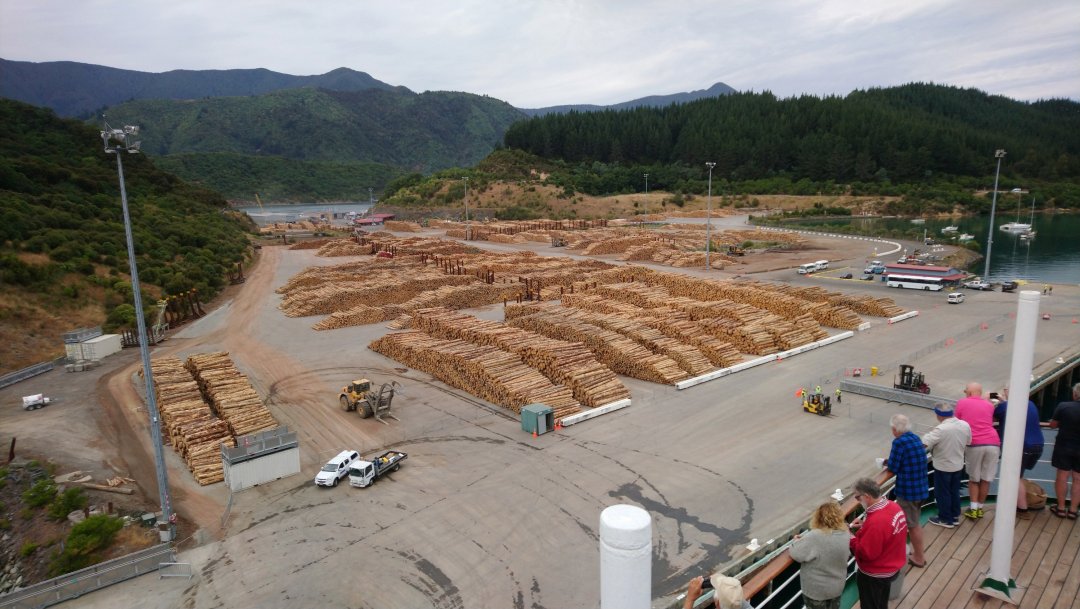
As we berthed, we found ourselves alongside what appeared to be a harbour dedicated to the export of vast piles of cut logs. From the outside decks, we could smell the not-unpleasant aroma of freshly sawn wood drifting on the morning air.
Our route into Picton took us through the stunningly picturesque Charlotte Sound. Along its steep, forested slopes, exclusive and remote summer houses clung to the mountainsides, accessible only by boat, no doubt owned by those seeking an escape from the rest of the world, at least for a while.
The surrounding landscape, however, looked very different 75 years ago. Early settlers had cleared vast areas of native forest to make way for Merino sheep farming, disrupting the region’s ecological balance. For over a century, birdsong had been absent from these hills. The combination of heavy seasonal rainfall and occasional violent tectonic movements (earthquakes) stripped away much of the topsoil, which was washed into the depths of Charlotte Sound.
With the departure of the sheep farmers, much of the land was left to regenerate naturally. However, a new problem arose when parts of it were planted with fast-growing Californian pine as a cash crop. In this climate, the trees grew five times faster than they would in their native habitat, and their seeds quickly spread into protected areas. Worse still, the roots of this species release a toxin that prevents the growth of anything beneath or near its canopy, hindering the return of indigenous flora and fauna.
The solution? A painstaking process: drilling four holes into the base of each invasive pine and filling them with poison. Given the challenging terrain and intense heat, it’s not a task I would envy.
Today, the surrounding hills and mountains are once again covered in a lush green canopy of tree ferns, mānuka, and black birch, among many others. Yet, here and there, silver-grey, stag-like dead pines punctuate the landscape, skeletal fingers reaching skyward as if to ask, “Why me?”
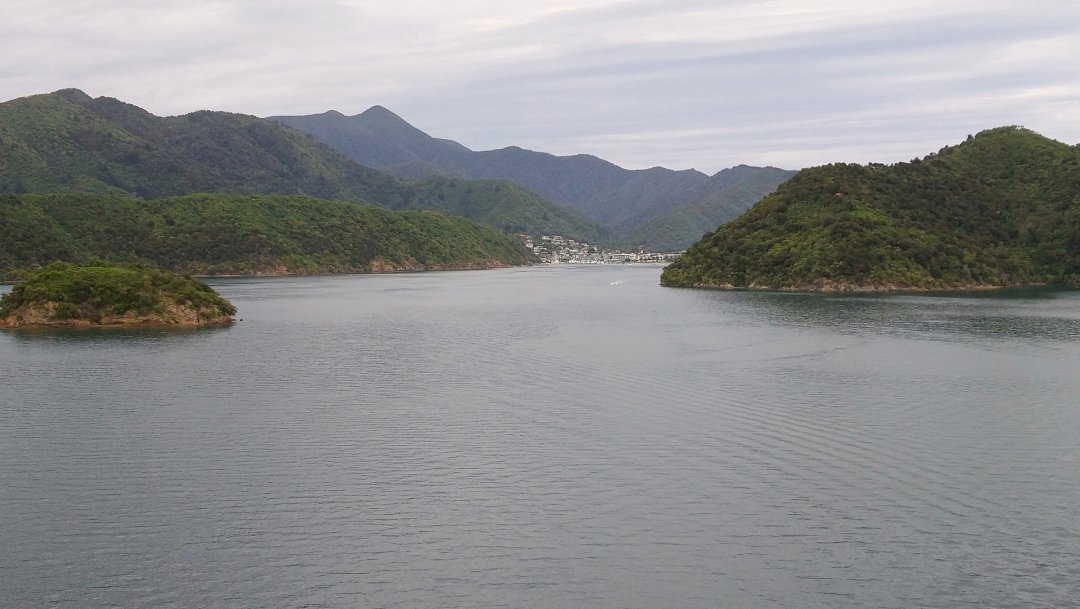
From our vantage point on Deck 14, we watched as the shore-side crew made preparations for the Columbus’s guests to disembark. The sea appeared flat and calm, with barely a breath of wind, so much for the “dangerous conditions” that had prevented us from docking in town!
Sue and I had originally planned to explore Picton in the morning before returning to the ship for our 12:30 p.m. tour. However, with the ship’s late arrival and the need for shuttle bus tickets to reach town (just 10 minutes away), it quickly became apparent that our ‘H’ tickets were too far down the queue to be viable. At 10 a.m., I handed them over to a grateful couple holding ‘O’, and we resigned ourselves to coffee and people-watching. Eventually, we supplemented our wait with yet another round of burgers (a habit that, at this rate, might be hard to shake when we get home!).
When the time finally came, our transfer to the town dock for the catamaran ride to Mistletoe Bay went smoothly. With half an hour to spare before departure, we wandered through the outdoor market conveniently set up beside the quay, snapping photos and browsing the stalls.
Once aboard, Sue and I managed to secure prime seats on the top deck, offering us an uninterrupted view of the journey. The catamaran wove its way through the scenic waterways, pausing at various beaches and slowing occasionally to admire the plush waterside residences dotting the shoreline. As we neared Mistletoe Bay, anticipation built; we were about to step into the heart of New Zealand’s bush country for a long-awaited walk.

Mistletoe Bay is home to a small, eco-friendly settlement where residents live year-round, entirely self-sufficient and independent of most modern comforts. They do, however, welcome small groups and individuals keen to experience this lifestyle, if only for a short while. Today, a cluster of schoolchildren appeared to be making the most of its minimal facilities, seemingly unfazed by the rustic setting.
Upon arrival, our group was divided into four smaller parties, each led by a guide for a short trek along the renowned Charlotte Sound Trail. While the full route takes four days to complete, our hike would last just 90 minutes. Fortunately, our group was composed of relatively fit walkers, meaning we could maintain a steady pace without frequent stops to wait for stragglers, one of the primary reasons I tend to avoid group walks!

The path itself was challenging enough to be a nightmare for anyone not reasonably fit, offering as authentic an experience as possible within such a short timeframe of the rigours of bush trekking. Our guide proved to be both knowledgeable and engaging, sharing fascinating tidbits about the local flora and fauna.
One particularly intriguing fact involved the black silver birch, which plays host to a truly bizarre creature. Resembling a stingray, it lives beneath the tree’s bark, with a thread-like tubular tail protruding just beyond the surface. At the very tip of this tail sits a glistening drop of honey, produced as the creature sips the tree’s sap. This sweet nectar, in turn, attracts ants and wasps, which then act as natural guardians of the tree. How neat is that?
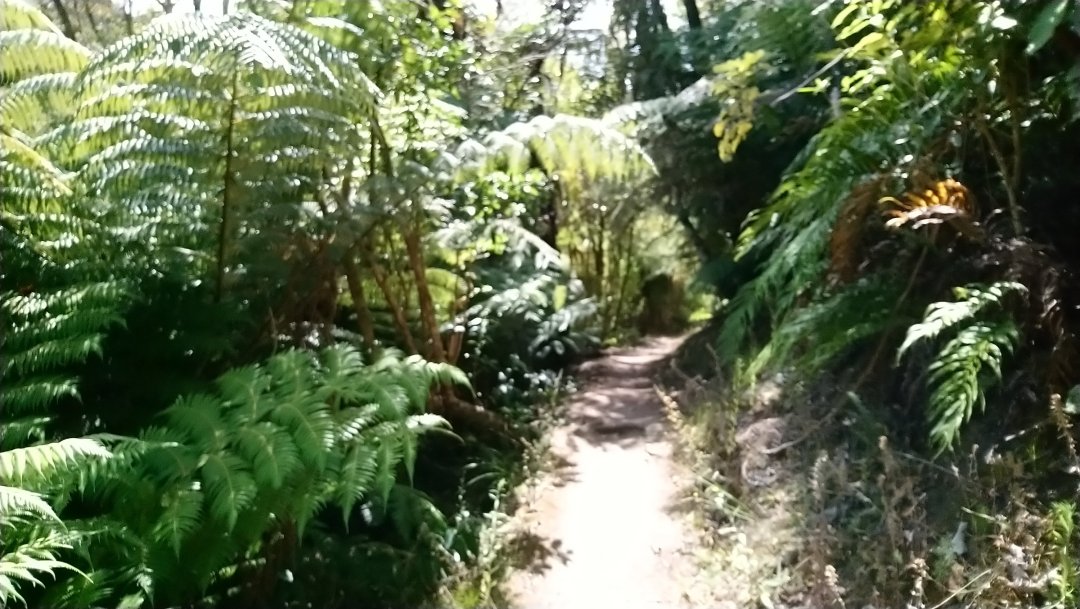
Another gem of information concerned the leaf of a particular tree, which the Māori traditionally use as toilet paper. After feeling it for myself, I could confirm that it was indeed soft yet durable enough for the job. If we lived here, I’m sure Sue would be delighted at the potential savings on our household toilet roll budget!
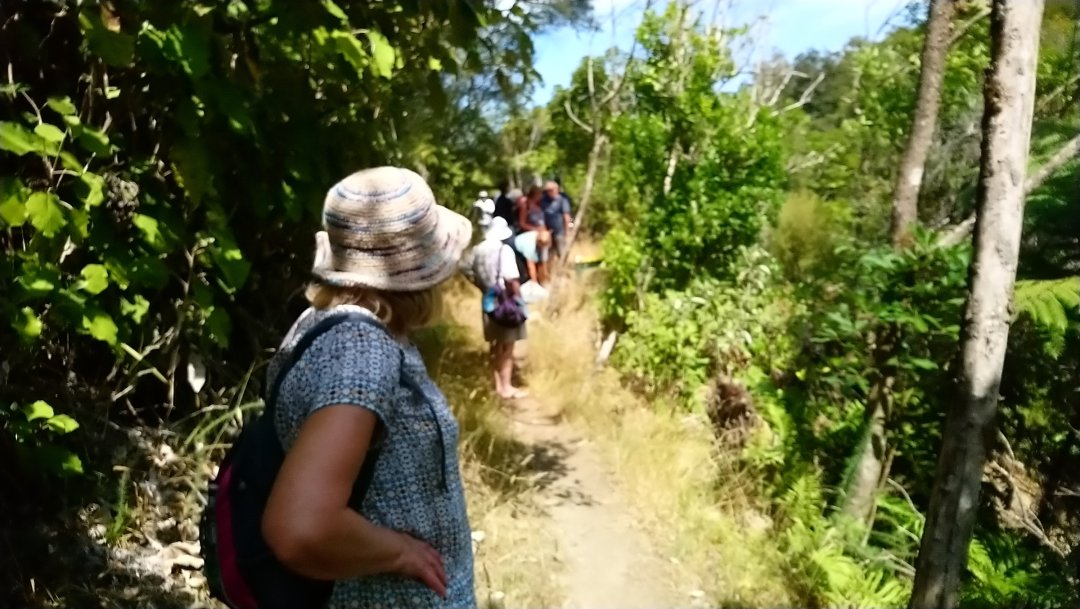
I thoroughly enjoyed this brief escape, wishing we had more time to immerse ourselves in the beauty of the New Zealand bush. All too soon, we were back on the catamaran, basking in the sun while sipping coffee and nibbling on chocolate biscuits. Our group was the first to return, while the last stragglers arrived nearly an hour later. It baffled me why anyone would attempt a bush walk in flip-flops!
As we skimmed across the water on our return journey, our captain provided a running commentary. He had been eavesdropping on the radio chatter between the captain of the Columbus and the Picton pilot, revealing that our unexpected berthing at the container dock wasn’t due to rough sea conditions after all. Instead, it turned out that the ship had mechanical problems and lacked the manoeuvrability required to dock at the narrow town pier. That certainly explained the loud bang that had startled Sue awake at 6:30 a.m., likely the thrusters struggling as the ship attempted to turn around in the confined waters of the sound. I, on the other hand, had slept soundly through it all. Hopefully, whatever the issue was, they managed to fix it while we were ashore!
As a gentle wind-up to the Australians on board, the captain of the catamaran cheerfully announced that, upon leaving New Zealand, the Australian government had decreed that every returning citizen must be in possession of a possum. This, he explained, was part of a cunning plan to rid New Zealand of the pesky marsupials, which have been wreaking havoc on the local wildlife ever since they were (rather thoughtlessly) introduced from their nearby neighbour. The Australians took it in good humour, though a few did look momentarily concerned, perhaps wondering how one goes about stuffing a possum into their hand luggage. 
With just over an hour to spend in Picton, we took a leisurely stroll along the narrow foreshore before exploring a small but charming quayside garden. Sue indulged in some retail therapy along Main Street, joining the other cruisers in their hunt for souvenirs, while I made a stop at the local pharmacy. There, I purchased a syrup that was promised to cure my persistent tickly cough. It tasted lovely, but in the end, it did absolutely nothing to relieve the cough. At $25, I may need to investigate New Zealand’s trade description laws!
Our departure from Picton was only slightly delayed, though we were missing one passenger. She had been hospitalised while ashore, and from the top deck, I watched as her husband, accompanied by a police escort, arrived at the quayside to collect her passport from the ship. I imagine incidents like this happen fairly often on cruise ships, but it’s not every day that we get to witness them firsthand. Hopefully, they have good insurance and everything works out for them.
Now, we have three sea days ahead, plenty of time to relax before reaching Sydney.


Leave a Reply